
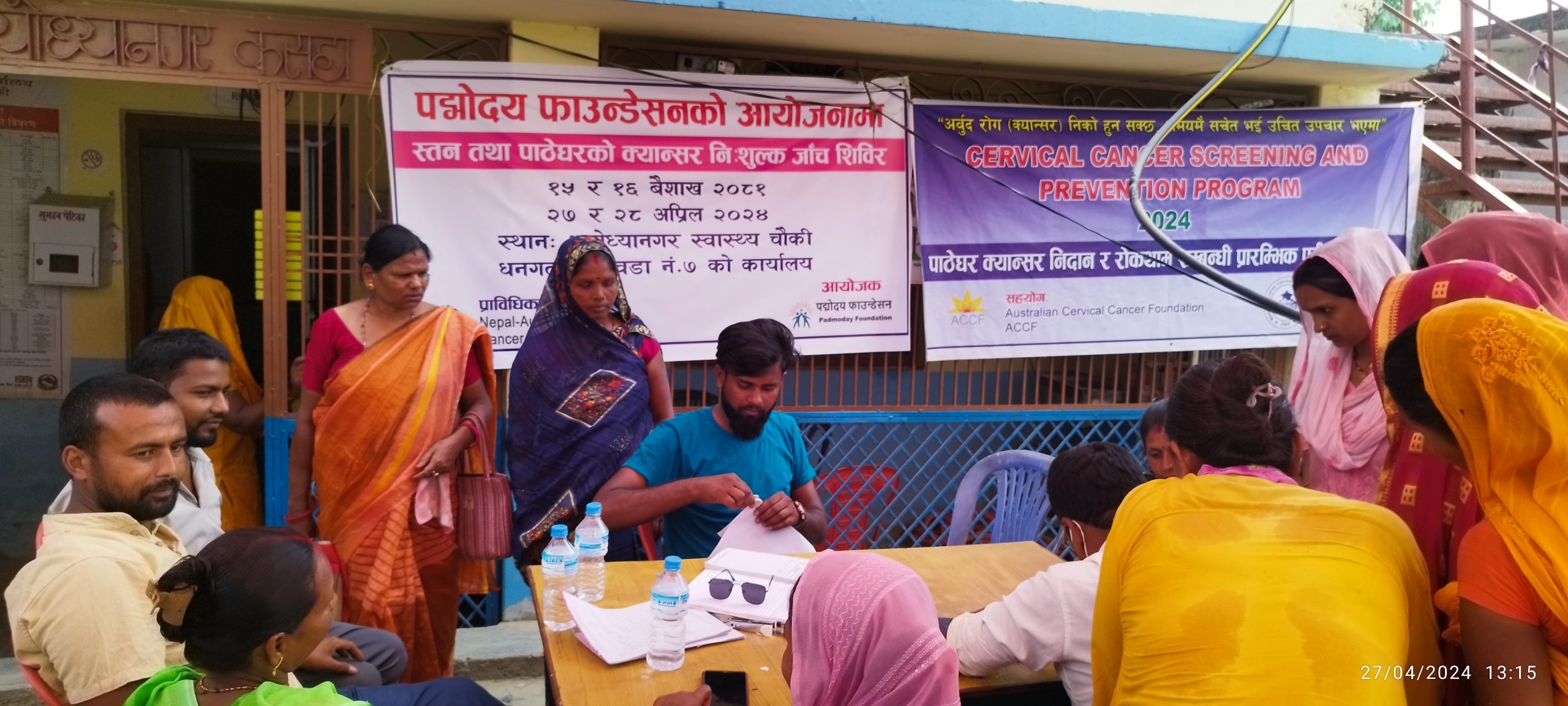


Apr 28, 2024 Dhangadhimai, Siraha – Cervical cancer is one of the leading causes of cancer-related deaths among women worldwide, particularly in developing countries. Early detection and prevention are critical to reducing the mortality rate associated with this disease. The Cervical Cancer Screening Camp and Prevention Program was organized with the primary aim of providing free cervical cancer screenings, raising awareness, and empowering women to take control of their health.
This program was spearheaded by the Padmoday Foundation in collaboration with the Nepal Australian Cervical Cancer Foundation. The initiative focused on women within the target age range of 30-60 years, providing them with access to essential screening services, educational workshops, and follow-up care.
2. Objectives
The main objectives of the Cervical Cancer Screening Camp and Prevention Program were:
- To provide free and accessible cervical cancer screening services (Pap smears and HPV tests) to women in the target age group.
- To educate women about cervical cancer, its risk factors, prevention methods, and the importance of regular screenings.
- To empower women to take proactive measures in their health management by understanding the need for vaccination and screenings.
- To provide follow-up care and referrals for women with abnormal test results to ensure proper diagnosis and treatment.
3. Services Provided

A. Screening Camps
- Free Pap Smears and HPV Tests: The program offered free cervical cancer screenings using Pap smears or HPV tests for women aged 30-60 years.
- Target Audience: Women within the age range of 30-60 years were the primary focus, as this is the recommended age group for cervical cancer screening.
- Screening Locations: The camps were set up in accessible community locations to ensure that women from underserved areas could also participate.
B. Prevention Education

- Workshops and Informational Materials: A series of workshops were conducted, providing women with valuable information about:
- Cervical cancer: its causes, symptoms, and treatment.
- HPV vaccination: the role of the HPV vaccine in preventing cervical cancer.
- Risk Factors: lifestyle factors, sexual health, and family history that contribute to the risk of cervical cancer.
- The Importance of Regular Screenings: educating women on how screenings can save lives through early detection.
- Materials Distributed: Pamphlets, brochures, and posters were distributed to participants in local languages for better comprehension.
C. Follow-up Care
- Referral System: Women who received abnormal test results were referred to nearby clinics or hospitals for further diagnosis and treatment.
- Guidance and Support: A dedicated team provided emotional and medical support, guiding women through the follow-up process.
4. Key Outcomes
A. Early Detection of Cervical Cancer
- Number of Women Screened: The camp screened total of 355 women, out of which 24 VIA Posative women treatment with thermocogulaion technology in camp, 21 uterine prolapse patients and 1 uterine cancer patient were identified and provided with medical and consultation services and were referred for further diagnosis due to abnormal test results.
B. Increased Awareness and Education
- Workshop Participation: Total of 500 men and women attended the educational workshops, where they learned about cervical cancer and the importance of preventive measures.

Certificate and token of love provided to The Nepal Australian Cervical Cancer Foundation team by Padmoday Foudation Patron Social worker Ashok Kumar Khadka
- Distributed Materials: Over 2500 number of informational pamphlets and brochures were distributed, educating the community.
C. Empowerment of Women
- Community Impact: The initiative created a ripple effect, as educated women shared knowledge with friends and family members, increasing community awareness.


5. Benefits
- Early Detection of Cervical Cancer: Regular screenings, such as Pap smears and HPV tests, allowed for the identification of abnormal cells and HPV infections, which are precursors to cervical cancer. Early detection has proven to increase survival rates and decrease cancer-related mortality.
- Increased Awareness and Education: Women became more aware of the risks associated with cervical cancer and the steps they can take to protect themselves, including the importance of getting vaccinated against HPV.
- Empowered Women: By providing education and free screenings, women were encouraged to take control of their health and make informed decisions regarding preventive care.
- Improved Access to Healthcare: The camp reached women in underserved or rural areas, providing them with services that might have otherwise been inaccessible due to financial or logistical barriers.
6. Challenges and Lessons Learned
A. Challenges
- Lack of Awareness: Despite efforts, there was still a significant lack of awareness about the importance of regular screenings, especially in rural areas.
- Cultural Barriers: Some women were hesitant to undergo screenings due to cultural stigma or lack of understanding about the importance of cervical health.
- Logistical Issues: Reaching remote areas posed logistical challenges, such as transportation and the availability of healthcare professionals in underserved regions.
B. Lessons Learned
- Community Engagement: Continued community engagement through local leaders, health workers, and peer educators is essential to overcoming cultural barriers.
- Tailored Education: Educational campaigns must be tailored to the specific needs and cultural sensitivities of the target communities.
- Improved Outreach: Future programs can benefit from expanding outreach efforts to ensure greater participation from rural and marginalized communities.
7. Conclusion
The Cervical Cancer Screening Camp and Prevention Program, organized by the Padmoday Foundation and technically supported by the Nepal Australian Cervical Cancer Foundation, was a success in providing critical health services to women in the target age group. By offering free screenings, education, and follow-up care, the program has played a significant role in increasing awareness about cervical cancer and empowering women to take proactive steps for their health.
The program has laid the groundwork for future initiatives aimed at combating cervical cancer through prevention, education, and early detection. The results and feedback indicate that with continued effort, more lives can be saved and more women can be educated about the importance of regular screenings.
8. Recommendations for Future Programs
- Increased Screening Coverage: Expand the reach of the program to cover more regions, especially rural and remote areas.
- Stronger Awareness Campaigns: Use media, community leaders, and local influencers to increase awareness about cervical cancer prevention.
- Follow-up Support: Strengthen the follow-up support system to ensure that women with abnormal results receive timely treatment.
9. Acknowledgements
The Padmoday Foundation extends its heartfelt thanks to the Nepal Australian Cervical Cancer Foundation and Australian Embassy of Nepal, DAP Program for their support, as well as to the healthcare providers, volunteers, and local community leaders who made this program a success. Special thanks to the women who participated and made this initiative impactful.


